Case Study
Simplifying Immigration Application Package for Better Access
Applying for permanent residency is a high-stakes, high-pressure process—especially for individuals already living in vulnerable conditions.
For out-of-status construction workers in the Greater Toronto Area, the application package intended to support them was difficult to navigate, leading to incomplete submissions, confusion, and avoidable rejections.
This project focused on rethinking that experience through a human-centred design approach—making the process clearer, more supportive, and easier to complete with confidence.
Role: End-to-end UX contribution
Timeline: 8 to 10 weeks
Tools:
Miro, Google Suite, Adobe Suite
Methods:
• Secondary research • Cognitive walkthrough • Heuristic evaluation • Interviews • Journey mapping • Prototyping • Personas • Journey Mapping • User & SME interviews
• Thematic analysis • Usability testing
Understanding the Issue
Canada’s construction industry relies heavily on migrant workers, many of whom entered the country legally but have since fallen out of status. Despite contributing to the economy, these workers often live in vulnerable conditions—facing limited access to formal systems, social support, and stable employment.
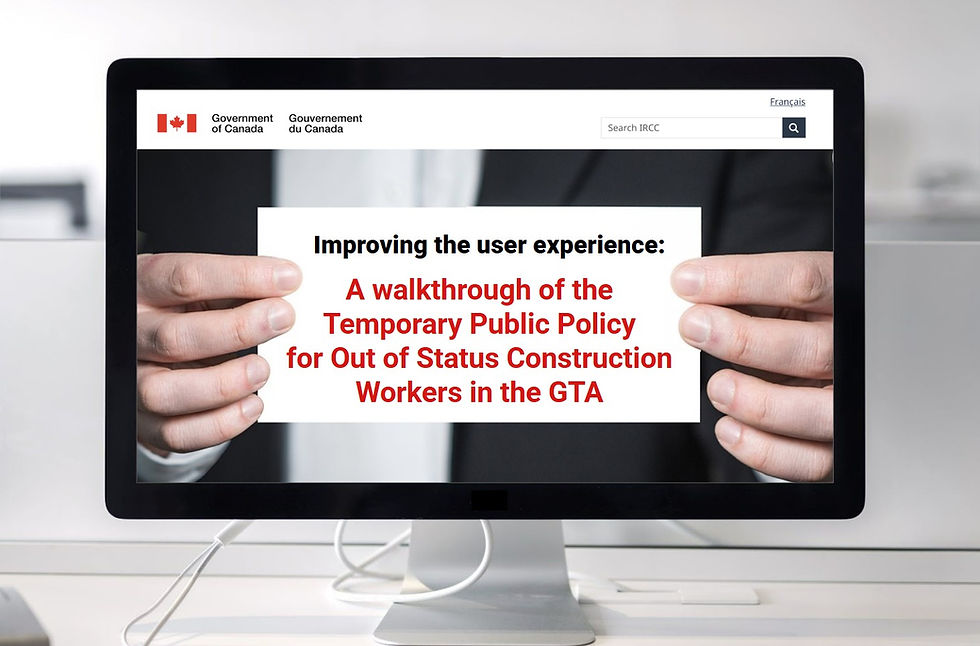
To address this, a temporary public policy was introduced to provide a pathway to permanent residency for out-of-status construction workers in the Greater Toronto Area.
However, the application package designed to support this transition created significant barriers.
Applicants struggled with:
-
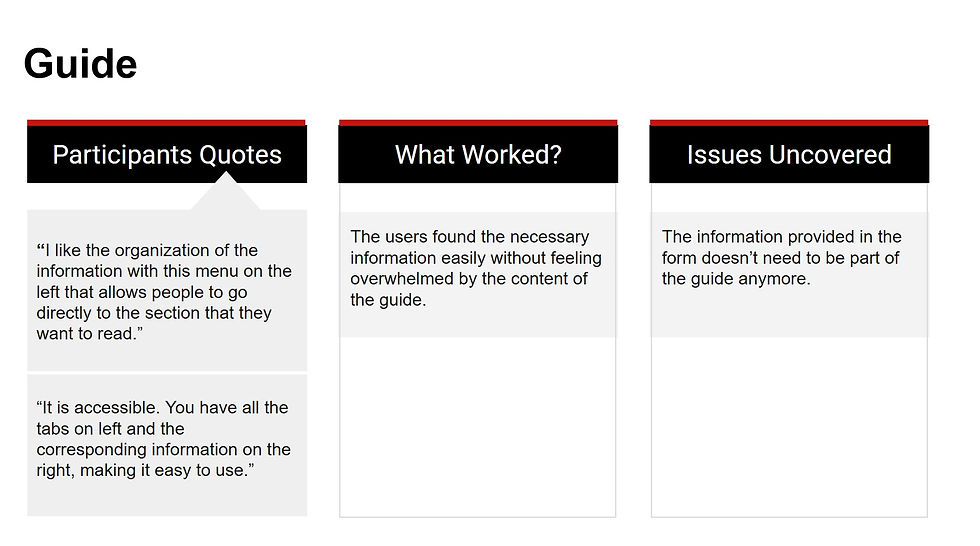
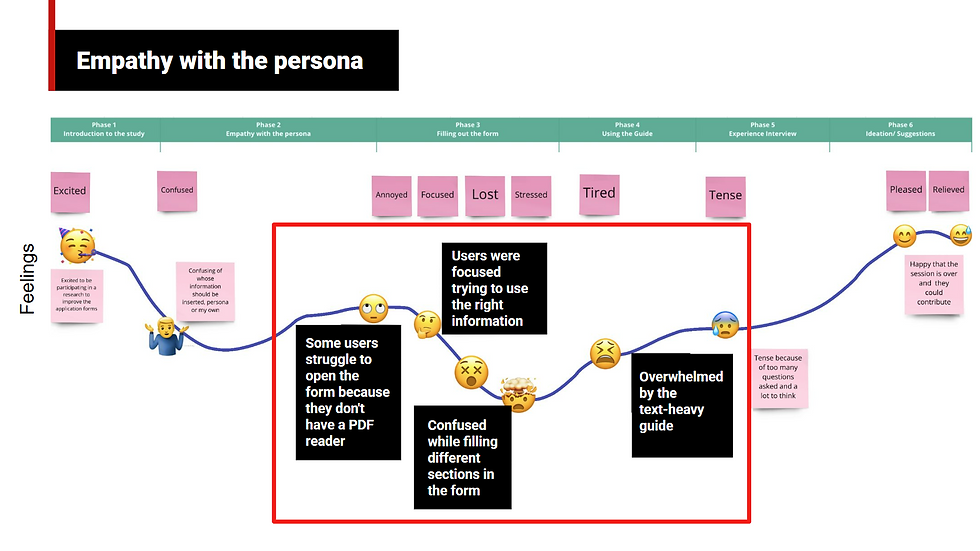
Complex, text-heavy forms and guides
-
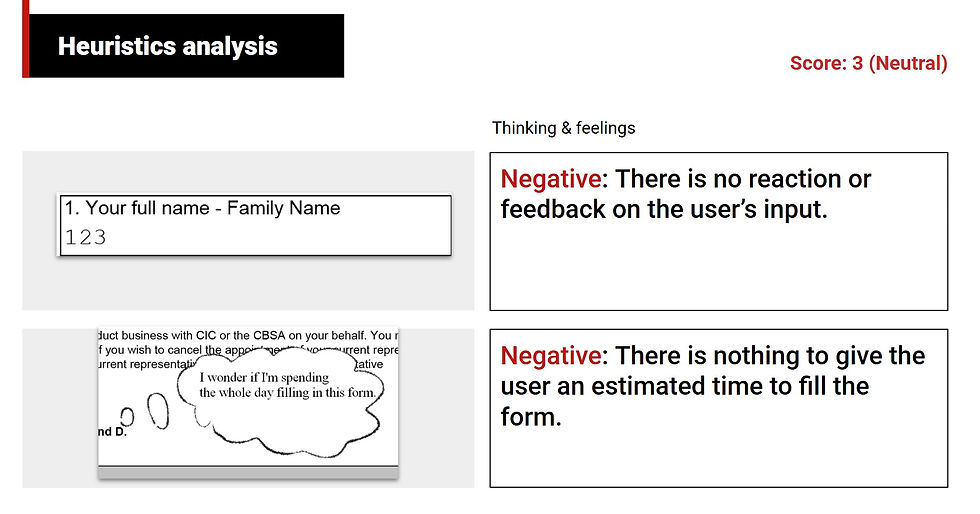
Unclear instructions and terminology
-
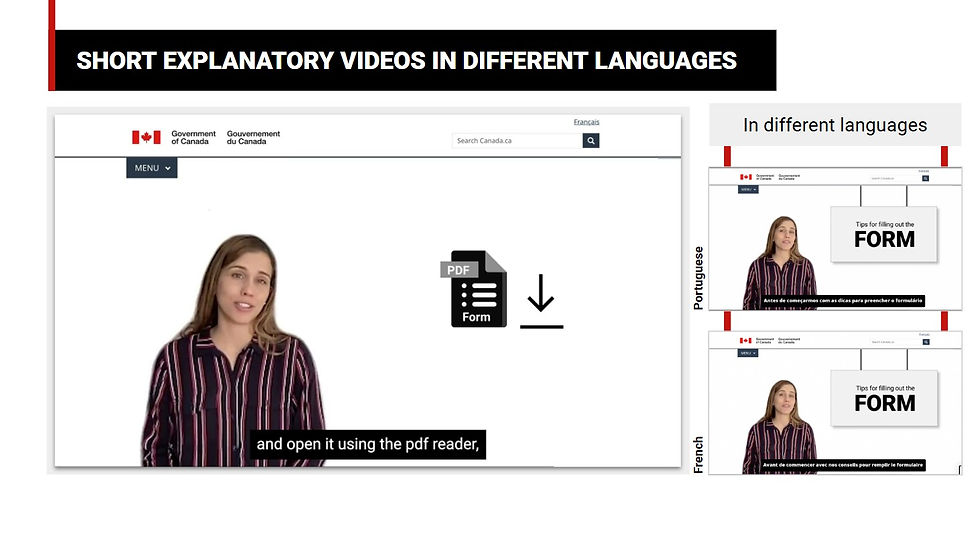
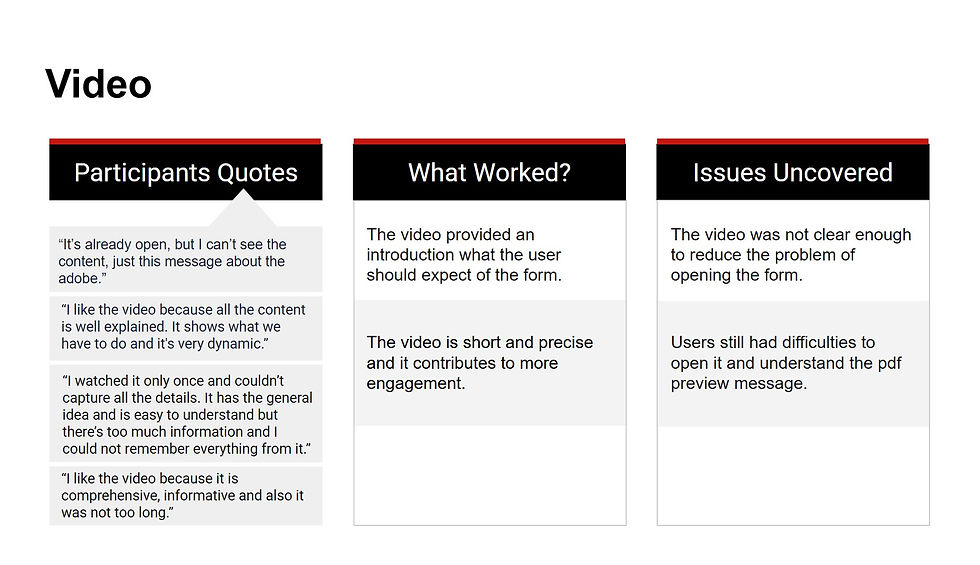
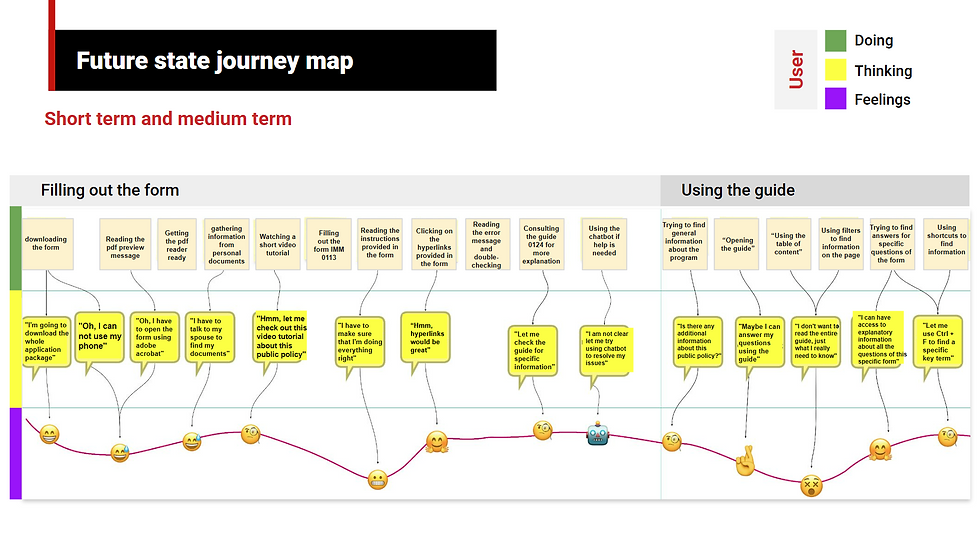
Technical challenges (e.g., accessing and completing PDFs)
As a result, there was a high rate of incomplete applications and avoidable rejections—not due to eligibility, but due to usability issues.
.jpg)